Blog
The Spiritual Journey: From Sacred Geometry to the Final Stroke

The creation of a Thangka is not merely an artistic endeavor; it is a profound meditative process that follows strict iconographic rules established over a millennium ago. At ZP Tangka, we invite you behind the scenes to witness the spiritual journey from a blank canvas to a consecrated masterpiece.
Phase 1: The Sacred Geometry
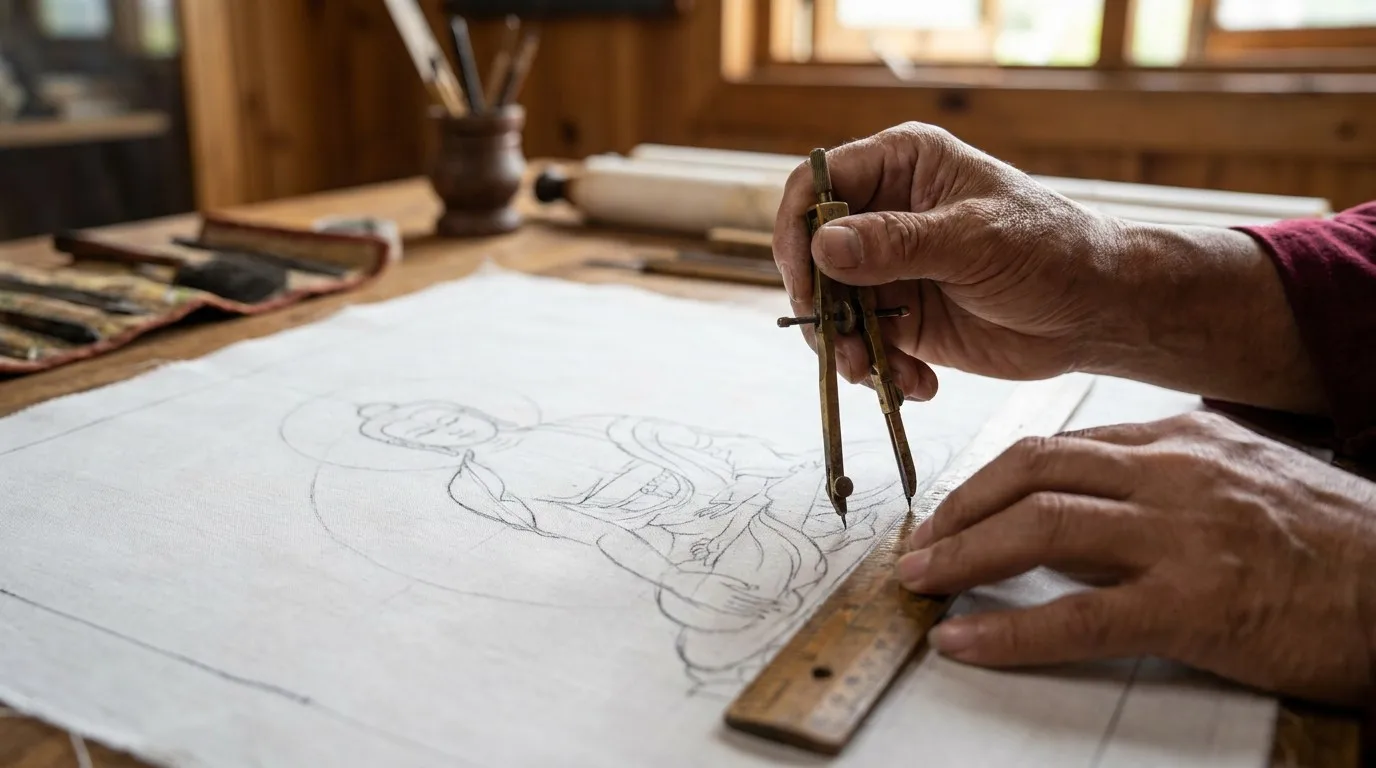
Before a single drop of color touches the canvas, the artist must lay down the sacred geometry. Using a compass and ruler, the artist draws a grid of proportional lines. Every deity has a specific set of measurements—the width of the eyes, the curve of the smile, the reach of the arms—all must adhere to the Sutra of Proportions. This ensures that the deity’s physical form correctly reflects their enlightened state.
Phase 2: Layering the Divine Colors
As discussed in our previous post, we only use natural mineral pigments. These are applied in layers, starting with the sky and background, moving toward the central deity. This process requires incredible patience and a steady hand, often taking weeks or even months for a single miniature pendant.
Phase 3: The Opening of the Eyes
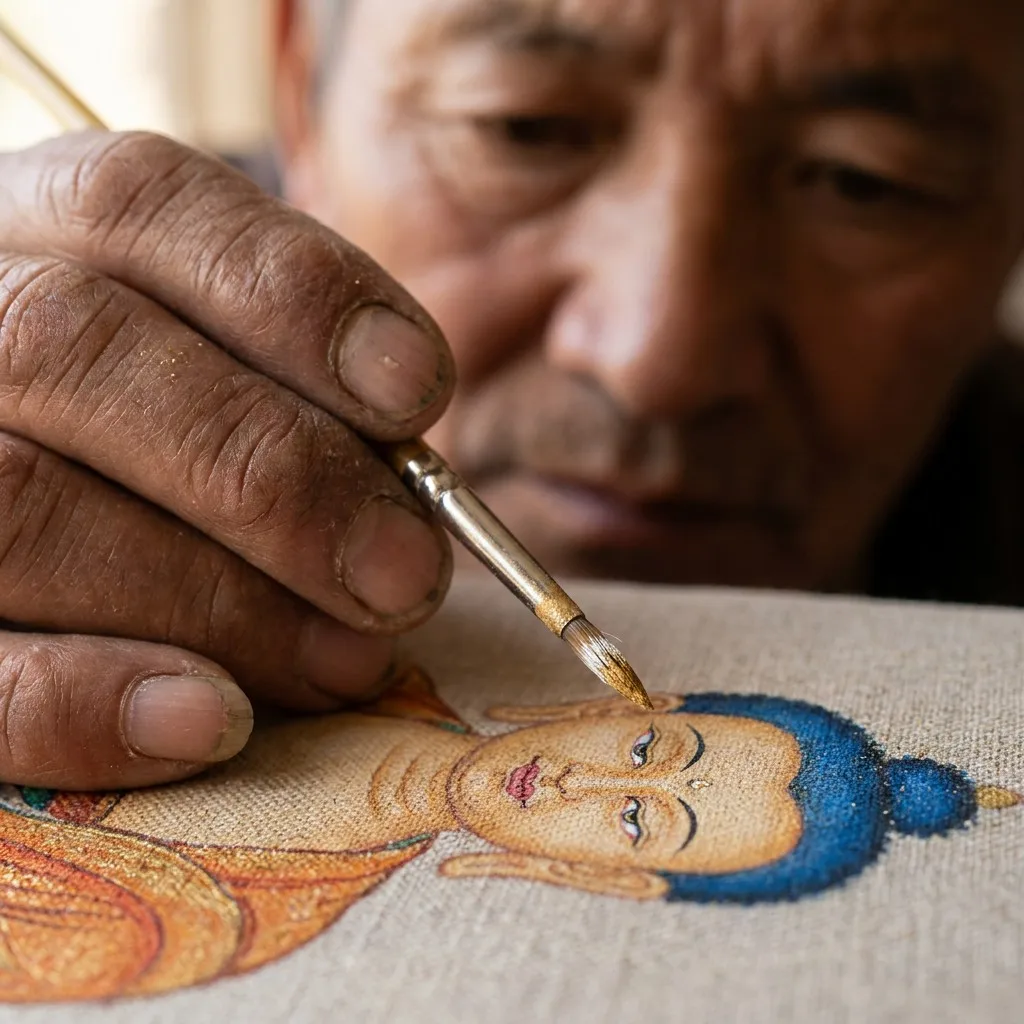
The most sacred moment in the entire process is the “Opening of the Eyes” (Drishti-dana). This is the final stroke where the artist paints the pupils of the deity. It is believed that at this moment, the Thangka is no longer just a painting; it becomes a living vessel for the deity’s energy.
A Companion for Your Spiritual Path
When you hold a ZP Tangka pendant, you are holding the culmination of this sacred journey. Each piece is crafted with devotion, ensuring that the ancient traditions remain alive in the palm of your hand.
Ready to find your guardian? Browse our full collection of handmade pendants and experience the divine craftsmanship for yourself.